
Why do people continue to engage in the use of alcohol despite knowing its associated risks?
By Thierry Chiu, July 2026
Every year, alcohol contributes to millions of deaths worldwide, and according to the World Health Organisation, it contributed to approximately 2.6 million deaths globally in 2019. (https://www.who.int/news-room/fact-sheets/detail/alcohol, 2024) These stem from a number of alcohol-related causes, from chronic diseases and mental health complications to injuries such as traffic accidents and interpersonal violence.
Despite these well-documented hazards posed by alcohol consumption, it remains extremely common in our society, widely accessible and socially accepted. Why do people continue to drink when the reality of potential harm is clear? There are several key reasons behind this issue, and it is important to understand so that we can handle alcohol consumption safely and support those who are struggling with alcohol dependency.
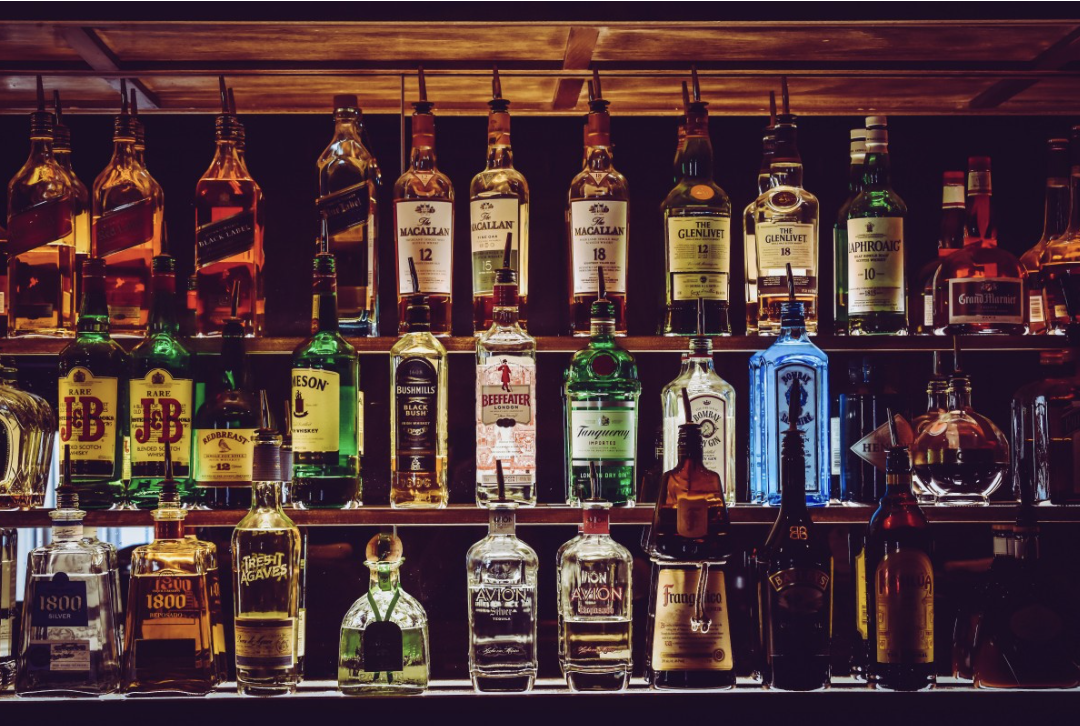
What is alcohol dependency and how does it occur?
In all alcoholic beverages, the key active ingredient is ethanol, which is contained in varying concentrations depending on the drink but are usually the main constituents of most alcoholic beverages along with water.
Ethanol (alcohol) is a substance known as a depressant, which is a category of drugs that slow the central nervous system of our body, inducing relaxation and relieving stress. It disrupts the normal function of the nervous system, increasing the production of chemicals such as serotonin, a hormone which contributes to feelings of tranquility and happiness.
Like other drugs, this initial wave of happiness can be a temporary means to relieve anxiety and frustration, however it often leads to the development of addiction. The brain after experiencing the ‘rewarding’ feelings of euphoria and relaxation releases large amounts of dopamine, which triggers the basal ganglia, the part of the brain associated with rewards and habits. (https://www.ncbi.nlm.nih.gov/books/NBK424849/, 2016)
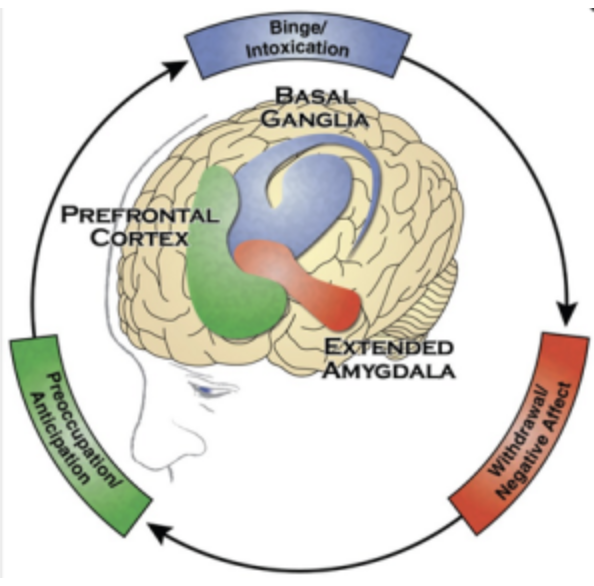
It also reduces the effects of glutamate, a chemical that normally stimulates brain activity. These changes further induce relaxation, reduced anxiety, and lowered inhibitions. (https://www.frontiersin.org/journals/neuroscience/articles/10.3389/fnins.2015.00144/full, 2015)
Thus, the withdrawal of the substance can lead to the individual becoming dependent on the substance to reexperience the feelings of euphoria. Alcohol is a substance much like other drugs can alter the function of your brain and nervous system. Furthermore, alcohol dependency is extremely damaging to the mental and physiological health of the affected and the interpersonal relationships of the individual.
Symptoms of alcohol dependence and excessive alcohol consumption
Alcohol dependence is not a specific disease; however, it is categorized by difficulties controlling the consumption of alcohol, or overpowering urges and being preoccupied with alcoholic beverages. Often referred to as alcoholism, there are a wide range of symptoms an individual can experience ranging from mild to severe. Many symptoms are behavioural or mental and include: (https://www.mayoclinic.org/diseases-conditions/alcohol-use-disorder/symptoms-causes/syc-20369243):
Inability to regulate or limit the amount of alcohol you drink
Intense desire or urge to consume alcohol
Becoming withdrawn or giving up daily activities to partake in drinking alcohol
Drinking alcohol even in unsafe situations such as while driving
Experiencing withdrawal symptoms, for example nausea, sweating and shaking, and mental effects such as irritability and anxiety when not drinking alcohol
Moreover, excessive consumption of alcohol also leads to severe physical consequences, especially over a long period of time. Some of these include:
Damage to the liver, as frequent use of alcohol places heavy strain of the liver leading to increased fat and inflammation of the liver, which can lead to permanent harm to the liver tissue
Complications with digestion and the stomach. Heavy drinking can cause inflammation to the stomach lining as well as other parts of the digestive system as the pancreas
Diabetic problems, as the consumption of alcohol, can cause spontaneous fluctuation in blood glucose levels, especially with high sugar alcoholic beverages. - This has an increased risk for a diabetic individual, which can induce hypoglycaemia (low blood glucose) as the liver cannot produce glucose due to the sudden influx of alcohol which can cause fainting. (https://www.rch.org.au/diabetes/living-with-diabetes/Alcohol/)
Cardiovascular diseases, as excessive drinking, can lead to high blood pressure (hypertension) and put individuals at risk of cardiac arrest, heart failure or stroke.
Why do many individuals still choose to consume alcohol excessively and how to seek support for alcohol dependency?
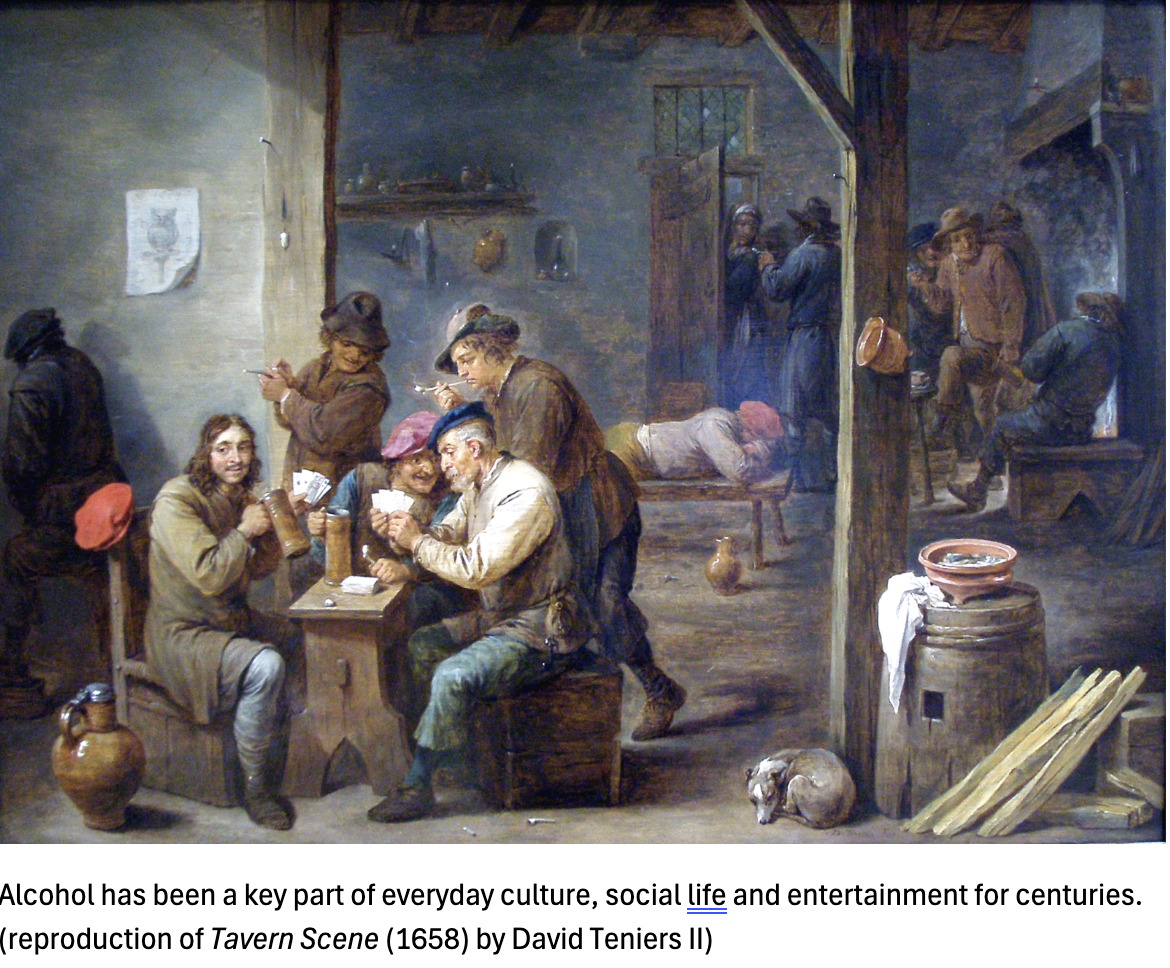
Alcohol has been a key part of everyday culture, social life and entertainment for centuries. (reproduction of Tavern Scene (1658) by David Teniers II)
While the detrimental effects of alcohol on our body have been clearly supported and some of its symptoms are highlighted above, it can be extremely difficult to overcome an alcohol dependence.
As mentioned previously, alcohol is a drug capable of temporarily changing the functioning of our body and nervous systems such as relaxation. As such, many individuals also use alcohol as a coping mechanism for stress, anxiety, trauma, loneliness, or depression.
Although alcohol may provide temporary relief, it does not address the underlying issues and can often worsen mental health over time. Nevertheless, the short-term emotional relief can make it difficult for individuals to stop drinking.
In addition to psychological effects, alcohol is readily accessible and this is further supported by its legal availability to any adult in most countries. Unlike illicit drugs, this contributes to the difficulty to regulate the intake and usage of alcohol by individuals.
Moreover, alcohol has deep cultural and societal connections to many communities, where it is deeply embedded in the everyday social life of many nations and accepted. Compared to other drugs, alcohol is socially far more normalized with occasions such as binge drinking being extremely common at gatherings despite its risks. The deeply intertwined nature of alcohol in culture and celebrations can make it very difficult to avoid the consumption of alcohol, especially when faced with social pressure.
All these external social factors coupled with addiction can make not engaging with alcohol a very difficult task, and many individuals are unable to seek the support required. If you or anyone you know is suffering from alcohol related issues, it is important to access help via medical professionals such as your doctor or access online helplines for non-emergency situations. Here are some resources you can access regarding alcohol related issues:
American Addiction Centers (24 hour)
313 710-9908 - https://americanaddictioncenters.org/alcohol-drug-hotline
Australian National Alcohol & Other Drug Hotline (24 hour)
1800 250 015 - https://www.lifeline.org.au/get-help/national-services/national-alcohol-other-drug-hotline
For the comprehensive list of helplines please visit https://www.helpguide.org/find-help for support that is based in a specific country.
Alcohol addiction is a serious, often overlooked issue in our society, and it can be extremely difficult to overcome the cycle of addiction. This biological impact is combined with the common use of alcohol as a psychological coping mechanism, making it even more difficult to avoid. Furthermore, alcohol is one of the most widespread drugs in our society and an integral part in many cultures and highly accepted in society, which are all reasons that people continue to consume these harmful substances in excess. Therefore, it is important that we understand these factors to reduce alcohol-related harm and support individuals affected by alcohol dependence and find adequate support when required.
This Article is written by our volunteer student research team at Feel Every Beat, and is intended for educational purposes only. It is not a substitute for professional medical advice.
References:
https://www.who.int/news-room/fact-sheets/detail/alcohol
https://www.ncbi.nlm.nih.gov/books/NBK531662/
https://www.beyondblue.org.au/mental-health/alcohol-and-mental-health
https://www.mayoclinic.org/diseases-conditions/alcohol-use-disorder/symptoms-causes/syc-20369243
https://www.rch.org.au/diabetes/living-with-diabetes/Alcohol/
https://www.frontiersin.org/journals/neuroscience/articles/10.3389/fnins.2015.00144/full
