
Powered by Caffeine: When Energy Becomes Addiction
By Mariana Kessler, July 2026
Coffee, Caffeine… Is everything the same?
Most of us don't think twice before grabbing a morning coffee. It's comforting, familiar, and gives us that extra push to get through school, work, or a workout. A simple dose of it may give us a sense of improved focus and performance. That boost comes from caffeine, a mild stimulant found in coffee that increases alertness and energy levels [1,5].
But coffee isn't the only source of caffeine. You can also find it in [3,5]:
Tea: One cup of black tea contains about 47 mg of caffeine.
Energy drinks: A standard serving (around two cups) contains roughly 170 mg.
Soda: A can of cola contains about 40 mg.
No matter where it comes from, caffeine is absorbed quickly by the body [3]. Many people start feeling its effects within about 15 minutes, and caffeine levels usually peak around an hour later. In some cases, it can take up to 10 hours for caffeine to completely leave the bloodstream [2].
Running on Caffeine and Stress
If you consume caffeine regularly, your body can gradually get used to it. This is known as caffeine tolerance, meaning you may need larger amounts to get the same energy boost you once got from a single cup of coffee [3].
Unlike many other stimulants, caffeine is legal, widely available [4,6], and often encouraged by a culture that celebrates productivity and late nights. Because of that, dependence can be difficult to recognize.
According to the U.S. Food and Drug Administration, up to 400 mg of caffeine per day (about four cups of brewed coffee) is generally considered safe for healthy adults. Adolescents aged 12 and older should stay below 100 mg per day [2].
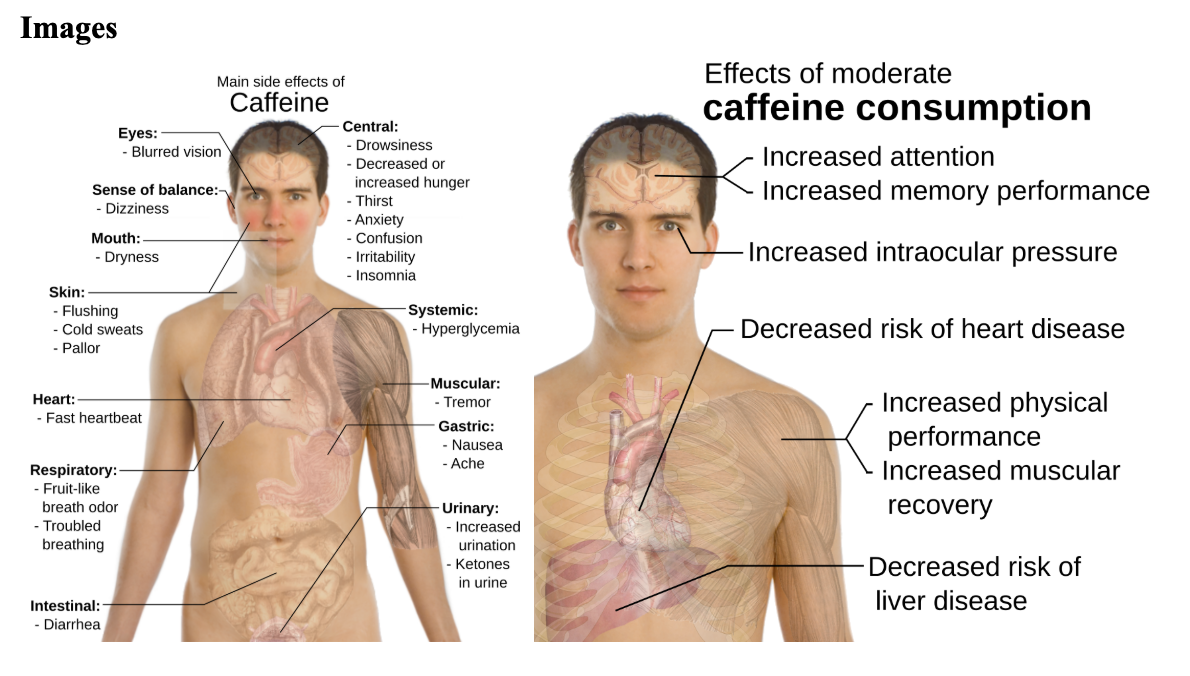
Even though caffeine is usually safe in moderation, consuming too much can lead to side effects such as [2,3,6]:
Nausea
Anxiety: High amounts of caffeine can increase heart rate and make some people feel nervous or jittery. People with anxiety or panic disorders may be especially sensitive.
Sleep problems: Caffeine interferes with adenosine, a hormone responsible for deep sleep, which deregulates other hormones and makes it harder to get quality rest.
In general, the more caffeine you consume, the greater the chance of experiencing these effects [2].
Breaking the Caffeine Cycle
If you've realized you're relying too heavily on caffeine, it's usually best to cut back gradually rather than quit overnight. Your body adapts to regular caffeine intake, and stopping suddenly can lead to withdrawal symptoms such as headaches, fatigue, irritability, and difficulty concentrating [2]. Ironically, many people continue consuming too much caffeine just to avoid these uncomfortable symptoms. Despite the harmful side effects, they continue to overconsume for productivity and energy [2].
Other than avoiding a fast change in caffeine consumption, these strategies may help if you’re trying to reduce your intake:
Figure out how much you're consuming. You may be getting caffeine from more sources than you realize. Find out how much you’re actually consuming and think about where you can cut back.
Stay hydrated. Drinking enough water can help maintain energy levels naturally.
Set a caffeine curfew. Avoid caffeine later in the day so it doesn't interfere with your sleep.
Switch to lower-caffeine options. For example, replace two morning coffee cups for one, or drink green tea instead of black tea.
Try decaffeinated alternatives. They can provide a similar taste and routine without as much caffeine.
Caffeine can be a helpful tool, but when every productive day depends on it, it may be worth asking whether you're using caffeine or whether caffeine is using you.
This Article is written by our volunteer student research team at Feel Every Beat, and is intended for educational purposes only. It is not a substitute for professional medical advice.
References
Clark, I., Landolt, H.P. (2017) ‘Coffee, caffeine, and sleep: A systematic review of epidemiological studies and randomized controlled trials’, Sleep Medicine Reviews, 31, 70-78. Available at: https://doi.org/10.1016/j.smrv.2016.01.006
Cleveland Clinic (2023) How To Quit Caffeine Without a Headache. Available at: https://health.clevelandclinic.org/how-to-quit-caffeine (Accessed: 23 May 2026)
Harvard T.H. Chan School of Public Health (2020) Caffeine • The Nutrition Source. Available at: https://nutritionsource.hsph.harvard.edu/caffeine/ (Accessed: 23 May 2026)
Reyes, C. M., & Cornelis, M. C. (2018) ‘Caffeine in the Diet: Country-Level Consumption and Guidelines’, Nutrients, 10(11), 1772. Available at: https://doi.org/10.3390/nu10111772
Roehrs, T., Roth, T. (2008) ‘Caffeine: Sleep and daytime sleepiness’, Sleep Medicine Reviews, 12(2), 153-162. Available at: https://doi.org/10.1016/j.smrv.2007.07.004
Uddin, M. S., Sufian, M. A., Hossain, M. F., Kabir, M. T., Islam, M. T., Rahman, M. M., & Rafe, M. R. (2017) ‘Neuropsychological effects of caffeine: Is caffeine addictive?’, Journal of Psychology and Psychotherapy, 7(02), 1-12. Available at: 10.4172/2161-0487.1000295
